Most of us are locked into a mobile ecosystem that requires a high level of trust in Big Tech companies. Prioritizing genuine digital privacy used to require either downgrading to inferior hardware or a computer science degree. That’s what makes the UP Phone so interesting. It’s a privacy-first device that combines a powerful open-source OS with a device that looks and feels state-of-the-art.
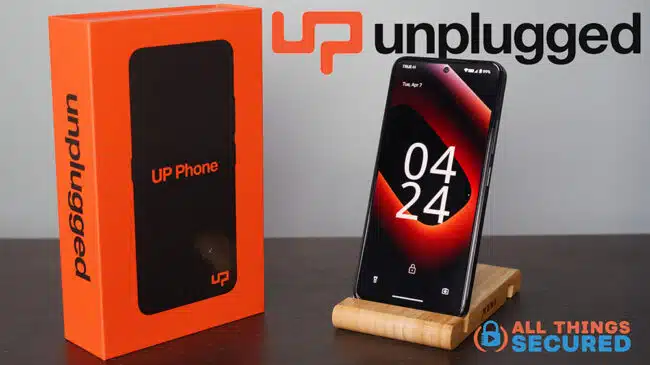
I’ve had a chance to test this phone for the past couple of months, and in this Unplugged Phone review, I want offer some thoughts on whether it’s an easy first step away from iPhone or Android, which are the most interesting privacy features and my overall user experience.
Unplugged Phone at a Glance
The Unplugged UP Phone is a 2026 privacy first smartphone built directly on the Android Open Source Project (AOSP), completely stripped of Google Mobile Services, and designed with an interface that feels immediately familiar to anyone switching from iOS.
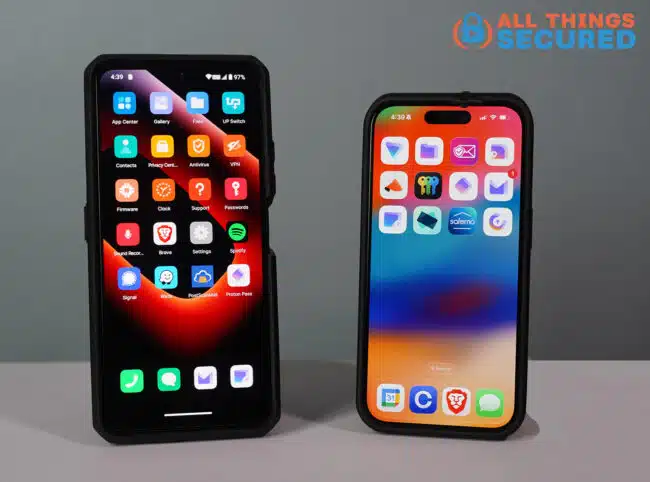
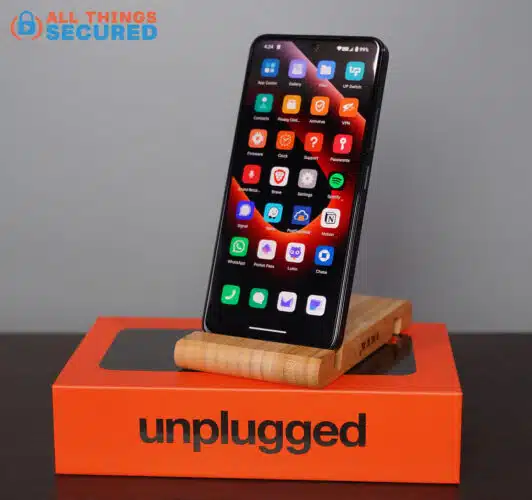
The home screen is almost identical with scrolling collections of apps and a dock on the bottom for the most used apps. But while mainstream devices tend to leak data from these apps to big tech servers, this phone blocks trackers at the operating system level.
Quick Verdict:
- Best for: Privacy-conscious consumers, ex-iPhone users, journalists, activists, professionals with sensitive data
- Skip if: You’re a mobile game enthusiast, deeply tied to Google or Apple services, or if you prefer unlocking your own phone for more control;
- Bottom line: a great turnkey privacy choice, but at a premium price
Key Specs Snapshot:
- Chipset: MediaTek Dimensity 1200 (roughly equivalent to a Snapdragon 870 or an A14)
- Storage: 8GB RAM, 256GB storage (expandable to 1TB+ via microSD)
- Display: 6.67” AMOLED display, 1080×2400
- Battery: 4,300mAh
- Cameras: 108MP main, 8MP ultrawide, 5MP macro
- OS: UnpluggedOS (LibertOS) built on AOSP
Price: $989 at launch (discounted down to $839), including one year of the Unplugged privacy suite—VPN, firewall, encrypted cloud storage, and private messenger.
Design, Hardware, and Everyday Performance
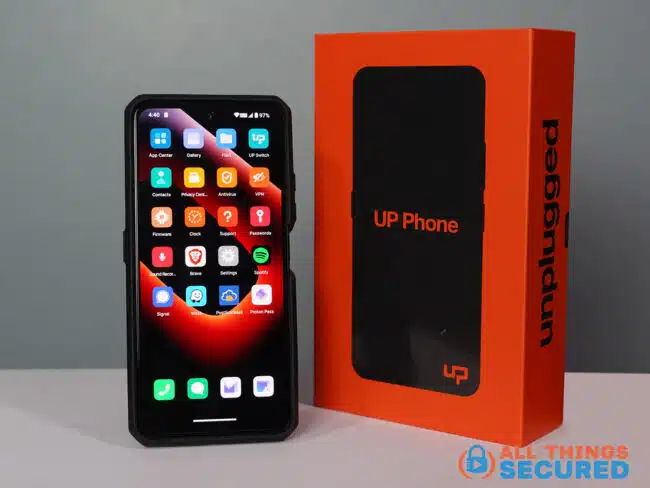
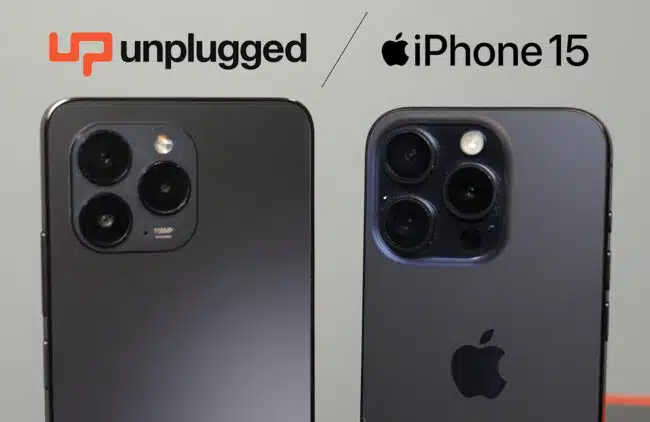
Over the years, I’ve tested a number of privacy phones and most feel like a significant downgrade from the latest devices on the market. The UP Phone, on the other hand, feels like a serious piece of hardware. The 6.67-inch AMOLED display sits in a slim aluminum frame with a glass back and a sleek graphite finish.
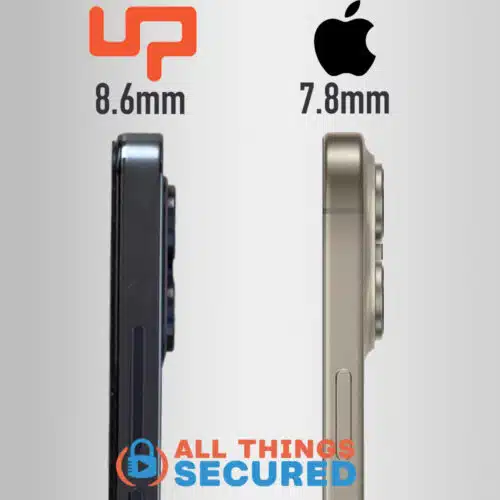
When I put it side by side next to my iPhone 15, the Unplugged Phone is slightly thicker, but otherwise very comparable.
Hardware Overview:
- The Chip: The MediaTek Dimensity 1200 is considered a premium mid-range chip that’s quite fast for daily usage but might not hold up against high-intensity gaming or editing.
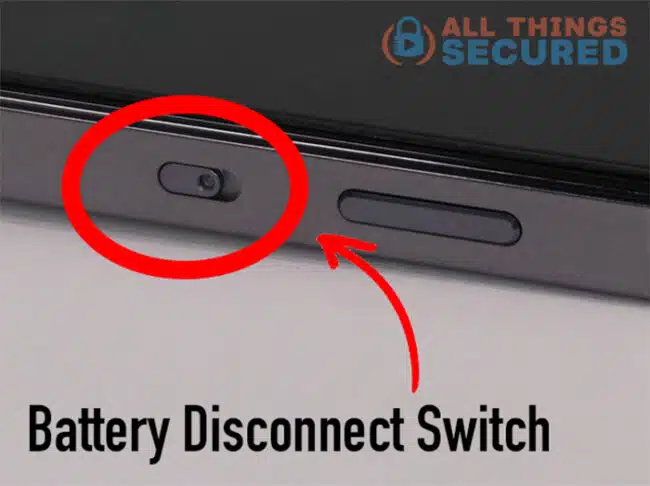
- Buttons: the phone has three primary buttons: power, volume and a customizable privacy button. There is also a unique battery disconnect switch on the left side.
- Storage: While there is a generous 256GB of internal storage, the kicker is the option for microSD expansion.
- SIM: The UP phone handles eSIMs but also has a physical SIM slot available.
- Ports: USB-C for charging and connection.
- Cameras: Front and back cameras
Real-World Performance:
In daily use, the phone runs smoothly for everything most users need—encrypted messaging apps, web browsing, video calls, and streaming. I’m not a mobile gamer, so I can’t speak to how the chip handles graphic-intensive processing, but for my simple usage I never noticed any lag.
The phone comes with a battery that matches or beats most flagship phones, which means screen-on time lands in the 6-8 hour range with the VPN, firewall, and other protections running constantly. Fast charging has functioned well (getting to around 30W+), getting me back to usable levels quickly.
The triple camera system captures acceptable photos for social sharing and documentation: a 108MP main camera for crisp, detailed shots, an 8MP ultra-wide lens for capturing more of the scene, and a 5MP macro camera for close-up detail.
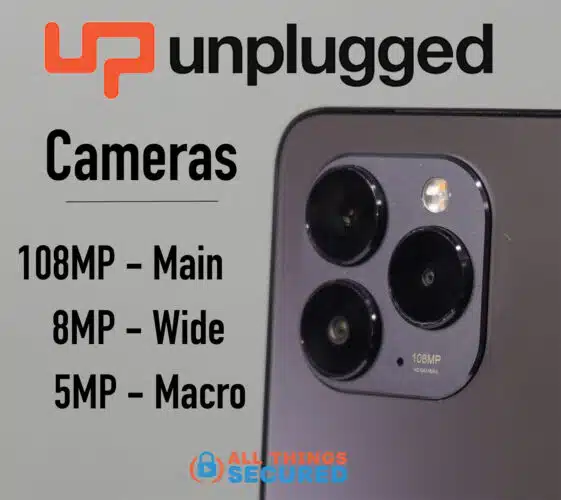
The 108MP main sensor handles daylight shots well, though low-light computational photography doesn’t compete with iPhone 16 Pro or Pixel 9 Pro. If high-end photography is your priority, this might not be your device.
The UP Phone is engineered to deliver both privacy and performance, making it a compelling choice for the modern Apple or Android user who values control over their data. The hardware is intentionally “good enough”—the real value proposition is the privacy architecture underneath, not benchmark-chasing specs.
LibertOS and AOSP Foundations: How the Software Works
Unlike most Android devices, the UP Phone runs a de-Googled version of the operating system, meaning Google services and Google Mobile Services (GMS) are completely removed. This ensures that your mobile experience is free from unwanted data collection and background tracking. While you won’t find the Google Play Store pre-installed, the device supports a wide range of Android apps through its curated app center, giving users the flexibility they expect without compromising privacy.
The phone runs UnpluggedOS (also called LibertOS), built directly on the Android Open Source Project. This means the operating system strips away every trace of Google services while maintaining full compatibility with standard Android apps and a familiar user interface.
Why AOSP Matters:
- The entire OS core is open source software—security researchers and independent auditors can review exactly what the system is doing;
- Unlike proprietary iOS or heavily customized android skins from Samsung and others, nothing is hidden;
- Unplugged has published their modifications publicly, so privacy claims are verifiable rather than just promises;
What “De-Googled” Actually Means on Unplugged Phones:
- No Google Play Store installed
- No Google location history running in the background
- No automatic data sync to Google accounts
- No baked-in telemetry or analytics SDKs collecting your behavior
- The data collected by default is essentially zero
The iOS Switcher Experience:
If you’re a long-time iPhone user, the design and gestures in the Unplugged operating system will feel very familiar. Home screen layouts, icon grids, control center toggles, and settings hierarchies all mirror the popular iPhone. If you’ve spent years on iOS, you won’t need to relearn basic navigation. This makes the UP Phone the true alternative for users who want privacy without a steep learning curve.
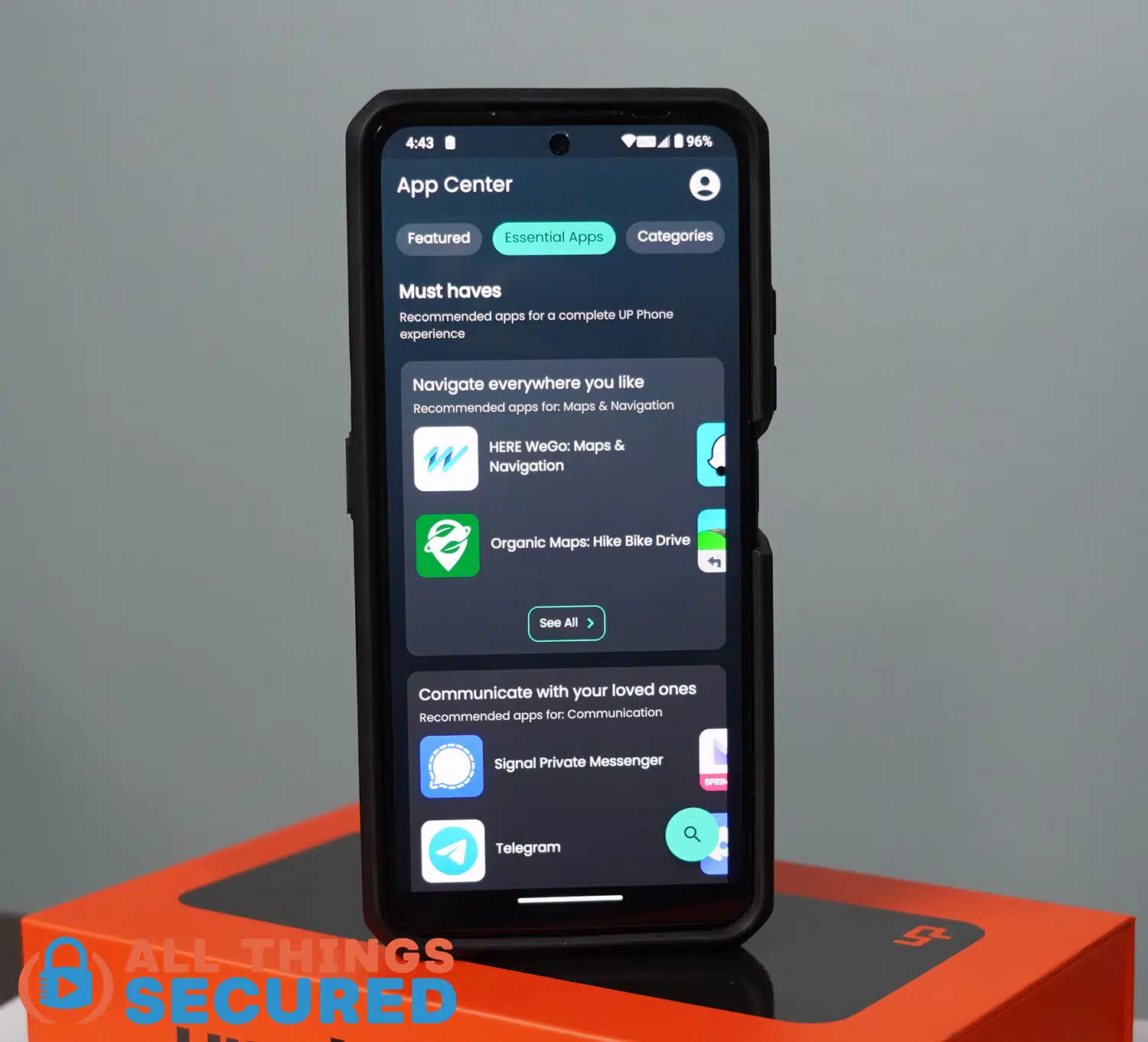
Apps come primarily from Unplugged’s own app center, which curates privacy-respecting software. Because of its AOSP roots, most mainstream android apps work, but with stricter permission controls. Some Google-dependent services may have limited functionality.
Privacy and Security Features: What Makes the Unplugged Phone Different
This is the core of any serious Unplugged phone review. The UP Phone isn’t meant to be a standard smartphone with a VPN bolted on—it’s engineered from the OS level to minimize data emissions.
Here are a few of the privacy and security features that set this apart from the average Apple, Google, or Samsung phone:
1. Device-Level Firewall
The UP Phone has a firmware-integrated firewall that inspects all outbound connections from apps in real time. For users, this means that:
- Tracking attempts are blocked before transmission, not just logged
- A privacy dashboard reveals blocked extractions—users report tens of thousands of blocked tracking calls per day
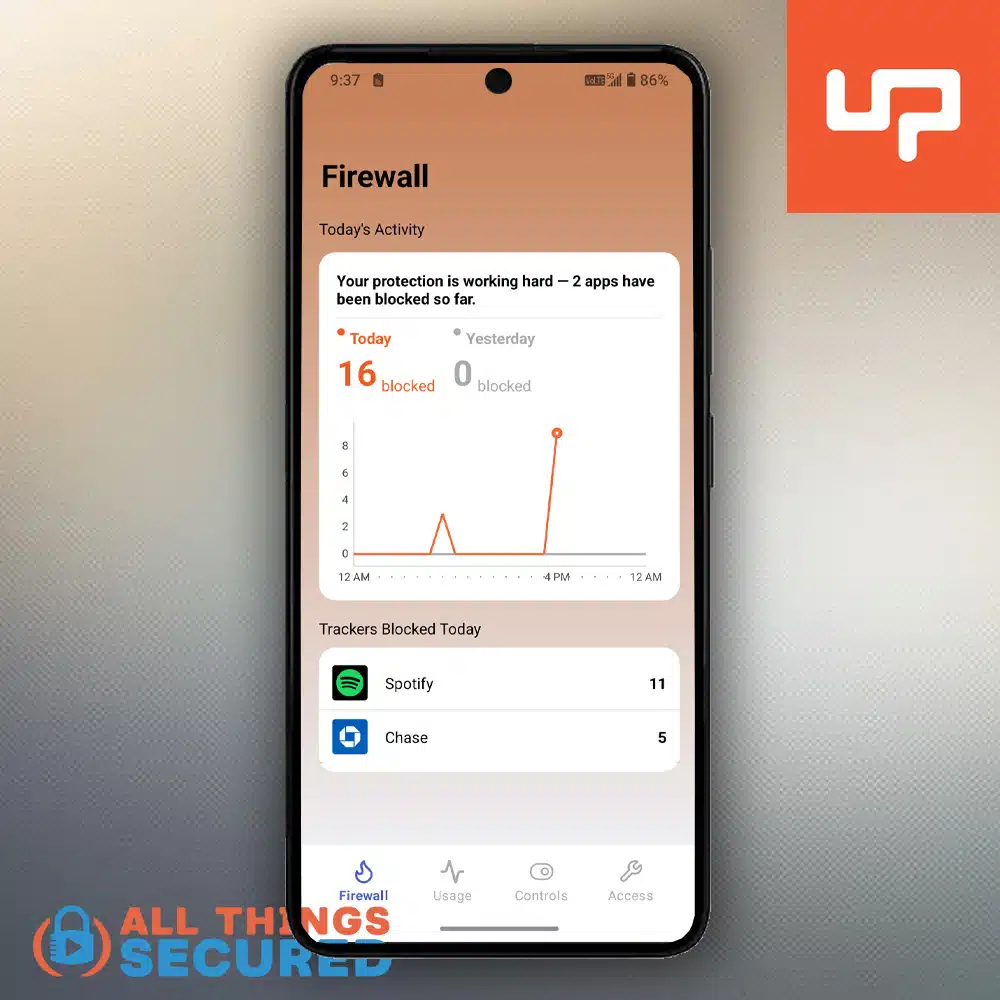
- Independent testing by Raxis showed the UP Phone sent zero data packets to third-party trackers during a 45-minute session, while a Samsung Galaxy S25 logged over 170,000 exchanges and an iPhone 16 Pro exceeded 210,000
2. “Off Means Off” Behavior
When you toggle off Bluetooth, WiFi, GPS, or cellular data, the device actually stops transmitting. This addresses documented vulnerabilities where mainstream smartphones continue emitting location pings and metadata even in airplane mode.
The physical kill switch on the side of the phone goes further—it completely disconnects the battery from circuits, rendering the device incapable of connecting to cell towers or receiving any signals. Again, many mainstream phones continue to send and receive signals even when powered down.
3. Liberty Mode Privacy Suite
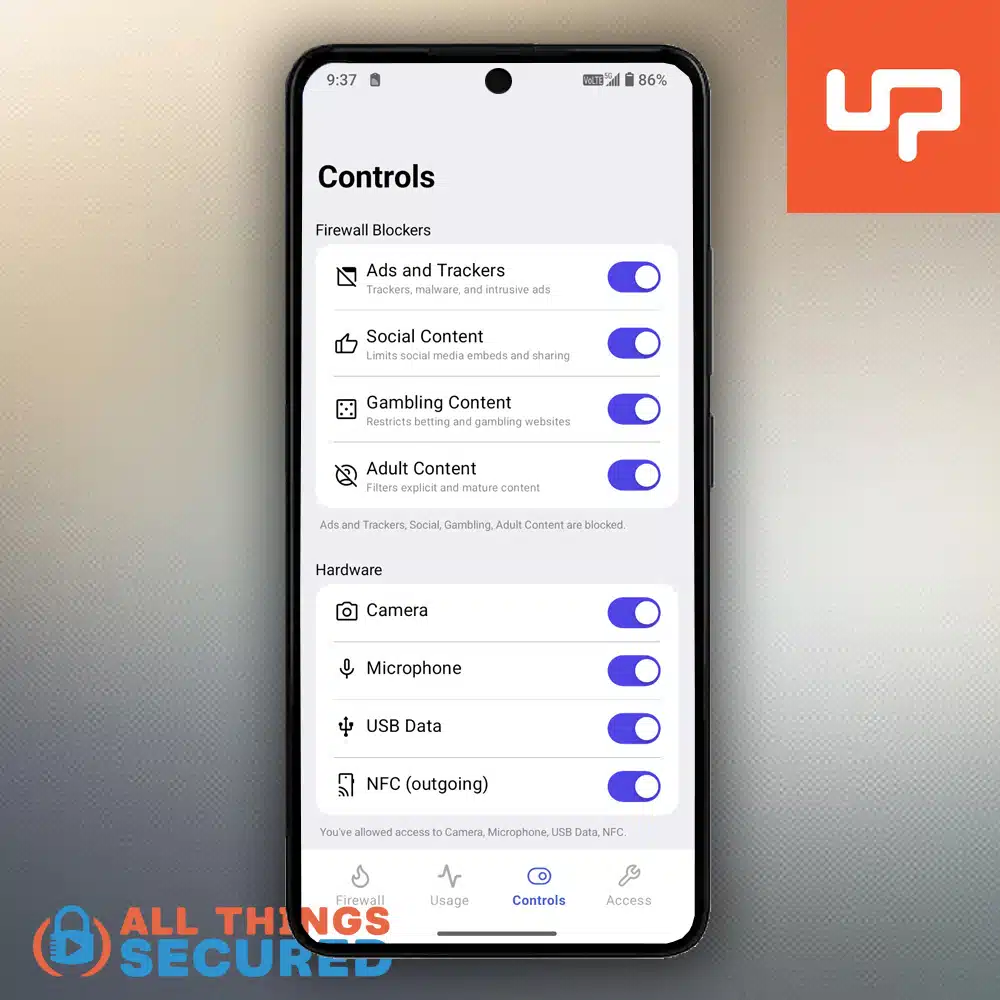
A dedicated “Privacy Center” app offers a number of special features and controls that you won’t get with most phones including:
- The option to active a no-logs VPN and restrict background apps for maximum privacy;
- Hardened DNS resolution that prevents tracking via DNS queries;
- Global hardware permission locks for microphone, camera, Bluetooth, USB data and even NFC;
- Controls that can’t be overridden by software without your explicit permission;
4. Secure Data Protection
- Full-disk encryption enabled by default with user-held keys
- Remote wipe capability via Unplugged’s secure console
- Timed auto-erasure options for high-risk scenarios
- Government-grade penetration testing by Alias Cybersecurity achieved zero successful breaches against forensic tools
5. UP Store Secure App Marketplace
The UP Phone includes a secure app marketplace called UP Store, allowing anonymous app downloads without censorship. Although most apps available on the Google Play store are available on Up Phone, Unplugged rates many apps based on their privacy and curates a selection of the best privacy-protecting apps.
6. Comprehensive Security Features
In addition to all of the privacy features and controls provided by the UP Phone, there are also a number of security features that include:
- Antivirus software is included as part of the UP Phone’s mobile security solution, enhancing user privacy and protection against malware and threats
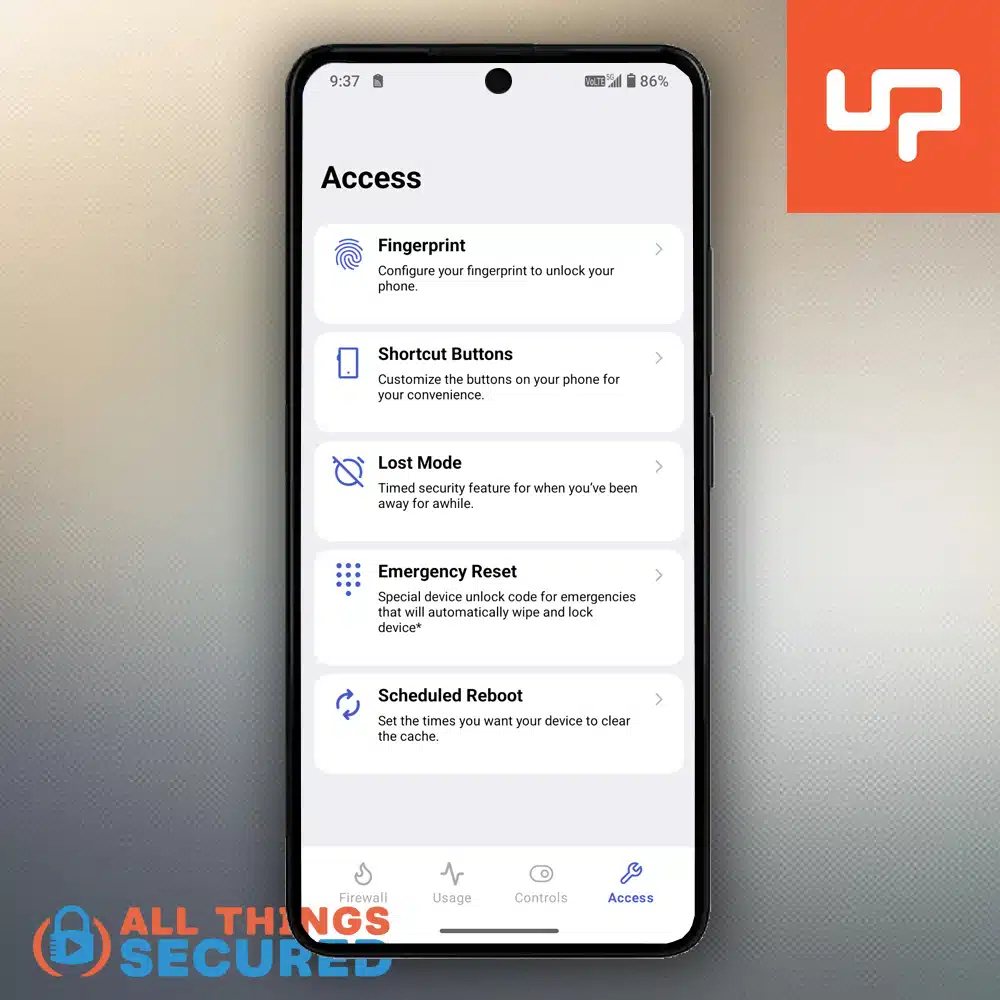
- Emergency Reset: you can set a special device unlock code for emergencies that will automatically wipe and lock the device.
- Scheduled Reboot: you can set specific times when you want your device to rebook and clear its cache, which is a great security precaution against many viruses and malware.
De-Googling and Digital Freedom
De-Googling your digital life is more than just a buzzword—it’s a movement toward reclaiming control over your digital life. The UP Phone embodies this philosophy by stripping away Google services and Google Mobile Services from its Android foundation, giving users a true alternative to the data-hungry devices offered by Big Tech. For the average Android user, this means the data collected by your phone is no longer quietly funneled to Google’s servers to generate targeted ads or track your every move.
The device is built to ensure that your personal information stays private, and that you—not a tech giant—decide how your data is used. This approach is especially important in a world where mobile devices are central to our lives and where the services we rely on often come at the cost of our privacy. By removing Google’s tracking infrastructure, the UP Phone allows users to enjoy the convenience of a modern smartphone without the constant surveillance and behavioral profiling that have become the norm.
For anyone seeking a true alternative to mainstream Android and iOS devices, in my experience, the Unplugged Phone is worth a try.
It’s a device designed for those who want to break free from the cycle of data collection and regain control over their mobile experience, making privacy not just a feature, but the foundation of the device.
The Easiest Privacy Alternative for iPhone Users
If you’re an iPhone user in 2026 uncomfortable with Apple’s expanding data collection but dreading technical complexity, the UP Phone specifically targets you. This isn’t a device that requires you to learn Linux or flash custom ROMs.
Onboarding Experience:
- Guided setup mirrors iOS simplicity
- Create an Unplugged ID instead of an Apple ID—same concept, different company
- Built-in backup and restore options work out of the box
- No flashing a device, no bootloader unlocking, no hunting for APK files
Familiar Interface:
Core apps—phone, messages, camera, browser, mail, calendar—are laid out to feel natural to iOS switchers. The settings menu structure, gesture navigation, and notification handling won’t leave you frustrated on day one.
Contrast with DIY Solutions:
Buying a Pixel and installing an open source OS is a powerful option for the technically inclined. But it requires ROM flashing, security key management, manual app vetting, and accepting a more barebones experience.
This kind of custom OS doesn’t hold your hand, and neither does its support ecosystem. The UP Phone delivers turnkey protection that regular consumers can use immediately.
Business Model Alignment:
Unplugged’s revenue model matters here. The company doesn’t generate revenue from ads, behavioral data, or analytics. They sell hardware and optional subscription services (VPN, anti-virus, etc.). There are no advertising profiles being built, no data monetization happening behind the scenes. When a free service seems too good to be true, it usually is—this device makes the money flow transparent.
What’s Maintained from iOS Convenience:
- Reliable push notifications for core apps via alternative protocols
- Smooth OTA updates delivered automatically
- Integrated cloud backup (via Unplugged’s encrypted cloud)
- Curated app store with familiar install/update experience
What’s intentionally missing: iMessage, iCloud, FaceTime. These services create lock-in and, in some cases, surveillance tradeoffs. The absence is by design.
Default Privacy vs Detailed Control
There are two types of privacy-conscious consumers: those who value simple, default privacy and those who want detailed control over every aspect of their privacy.
The Unplugged Phone is quite clearly designed for the former – the person who prefers a turnkey solution with simple privacy as the default. It comes with encrypted cloud storage, a built-in VPN and a dedicated firewall as part of the package. You don’t have to set it up or deal with complicated settings. By default, the phone ensures that sensitive information remains protected from unauthorized access and prying eyes.
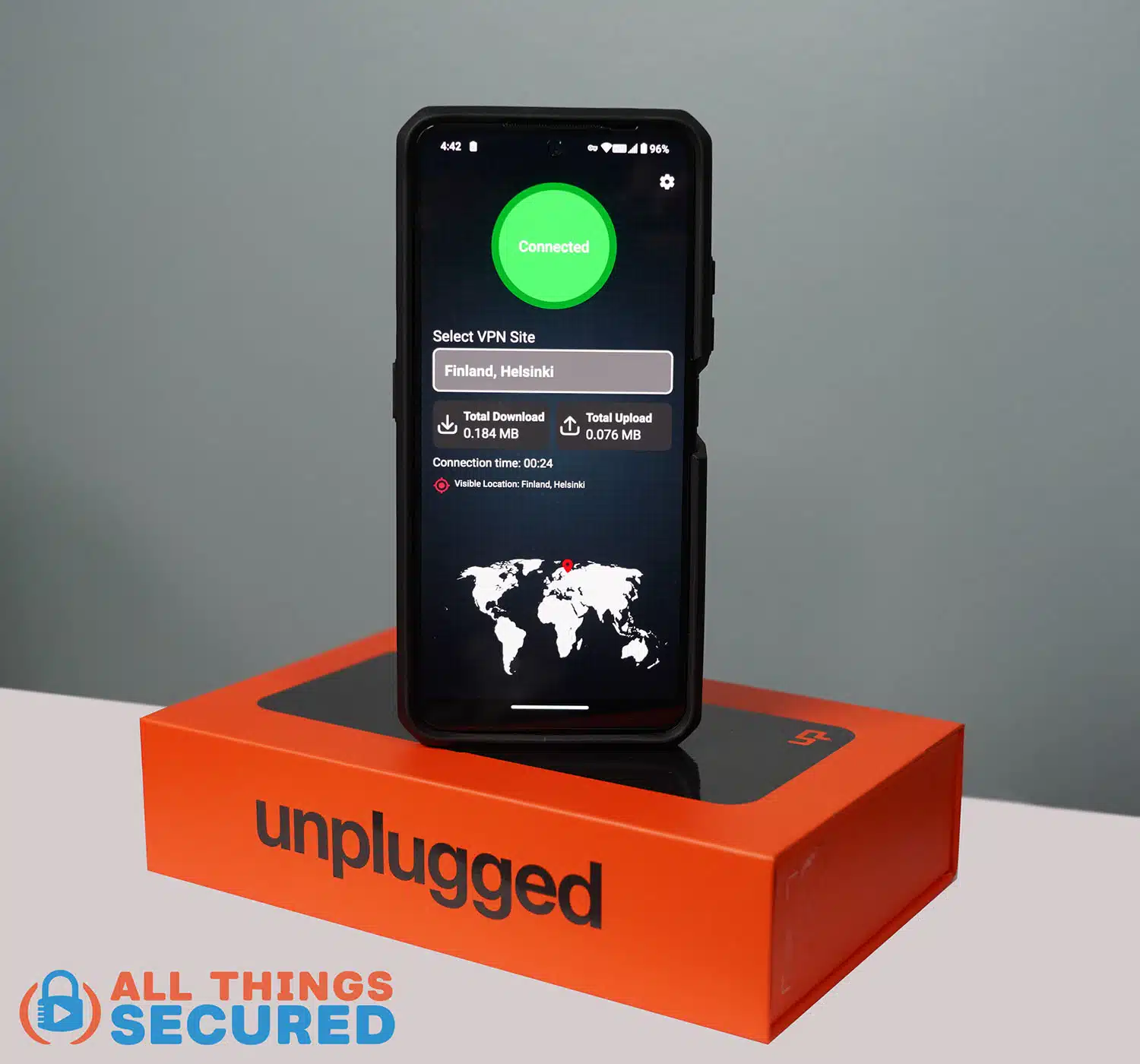
In today’s digital landscape, where data breaches and cyber threats are all too common, it’s not just about security (flagship phones from Apple, Google & Samsung are quite secure), it’s about how your digital device handles your data. Unplugged’s focus on empowering users to take control of their data, particularly for those who already feel reticent about moving away from the comfort of iOS or Android, is what makes this a useful tool.
Apps, Compatibility, and Trade-Offs
App availability is where privacy phones succeed or fail. The UP Phone makes deliberate compromises, and you should understand them before switching.
Well-Covered Categories:
- Secure messaging (Signal, Element, and Unplugged’s private messenger)
- End-to-end encrypted email providers
- Privacy-respecting browsers and search engines
- Office productivity and document editing
- Navigation via privacy-first map alternatives
Potential Limitations:
- Apps heavily dependent on Google Play Services may have reduced functionality
- Some bank apps may behave differently—check your specific institution (for me, Chase bank and my bank app in Thailand worked just fine)
- Push notifications work for core apps but may vary for others
- In-app purchases function through vetted alternative stores
There is no official Google Play Store or Apple App Store by design. This isn’t a limitation—it’s the point. Fewer hooks for cross-app tracking, fewer analytics SDKs, fewer behavioral profiles being built without your knowledge.
Check your must-have apps against the Unplugged App Center before making the full switch. The website lists supported applications and known compatibility issues.
The app model remains familiar: tap an icon, install, update when prompted. Permission prompts are stricter than stock android, and per-app network controls let you decide which apps can connect to the internet at all.
Price, Value, and Who Should Buy the Unplugged Phone
The cost context matters. At $989 (currently discounted to $839), the UP Phone isn’t cheap—and includes only the first year of the privacy suite subscription.
Pricing Breakdown:
- Device: ~$989 (US-only, currently discounted to $839)
- Bundled first year: VPN, firewall, encrypted cloud, private messenger
- Subsequent years: ~$130/year subscription for continued privacy suite access
- Total 3-year cost: approximately $1,249 (device + two additional years)
Hardware Value Comparison:
The MediaTek Dimensity 1200 and 8GB RAM represent 2021-era flagship specs. Mainstream 2025-2026 phones at this price point offer newer chipsets and better cameras. You’re paying for privacy architecture, not bleeding-edge hardware.
The Hidden Cost Calculation:
Free services on iOS and android aren’t actually free. Your location data, browsing habits, app usage patterns, and behavioral profiles are monetized constantly. The UP Phone’s price reflects the absence of this hidden cost—you’re the customer, not the product.
Ideal Buyers:
- Journalists protecting sources
- Activists operating in surveillance-heavy environments
- Professionals handling sensitive client data
- Privacy-conscious parents concerned about data collection
- Anyone wanting strong protection without technical expertise
User feedback is polarized, reflecting a divide between privacy-focused customers who value the device for its strong privacy features, and technical enthusiasts who are more critical of its hardware and software limitations.
Who Should Skip:
- Mobile gamers wanting the latest Snapdragon performance
- Users unwilling to leave the Google or Apple ecosystem
- Those who prioritize camera quality above all else
- Budget-conscious buyers seeking sub-$500 devices
The Verdict
The Unplugged UP Phone is currently one of the simplest, most familiar ways for an iPhone user to move into an open-source, AOSP-based, genuinely private smartphone. It’s not a clear cut scam or vaporware—independent security testing validates the claims. The subscription model ensures ongoing support without data monetization.
It’s important to note that most smartphones often compromise user privacy in exchange for convenience and functionality, a trade-off the UP Phone seeks to address directly.
If digital privacy matters to you and you’re willing to pay flagship prices while accepting a few app ecosystem compromises, this device delivers exactly what it promises. For iPhone users ready to reclaim control over their personal data without becoming security experts, the UP Phone offers the smoothest path available in 2026.
Future of Smartphone Privacy
As concerns about data collection and digital surveillance continue to grow, the future of smartphone privacy is becoming a central issue for consumers worldwide. The UP Phone is at the forefront of this shift, offering a true alternative to traditional smartphones that prioritize data monetization over user security. With its de-Googled operating system and comprehensive privacy features, the UP Phone is designed for users who want to take back control in a world where personal data is increasingly at risk.
Looking ahead, the demand for privacy-first smartphones is only expected to rise. Users are becoming more aware of how their data is used to generate revenue for tech companies, and many are seeking devices that put privacy and security first. The UP Phone’s focus on user control, robust security, and digital freedom positions it as a significant player in this evolving market.
As the world becomes more connected and mobile devices become even more integral to daily life, the need for secure, privacy-focused smartphones will only intensify. The UP Phone offers a clear cut, true alternative for those who refuse to accept the status quo of data-driven technology. For anyone looking to protect their privacy without sacrificing the convenience of a modern smartphone, the UP Phone is a forward-thinking choice that sets the standard for the future of mobile privacy.